
Google Ads Quality Score Explained
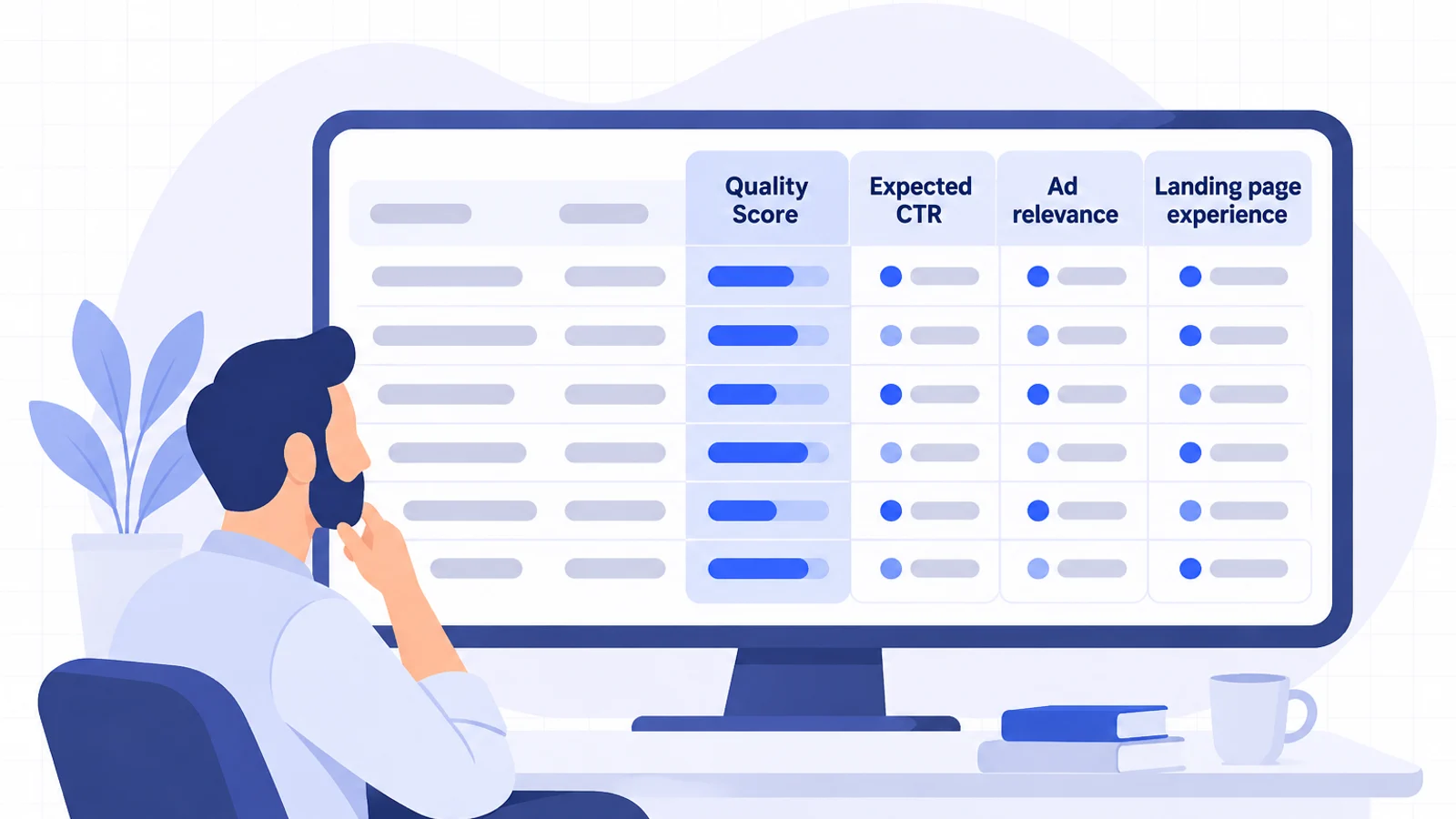
Google Ads Quality Score is a 1–10 rating, shown for each keyword, that estimates how relevant and useful your ads and landing page are compared with other advertisers on the same searches. Google describes it as a diagnostic: a warning light for where to improve, not a target to chase.
What Are the Three Quality Score Components?
Google builds the score from three components, each rated "Above average," "Average" or "Below average" against advertisers whose ads appeared for exactly the same search over the previous 90 days (Google Ads Help, About Quality Score):
- Expected clickthrough rate (CTR): CTR is the share of people who click an ad after seeing it; this component predicts how likely your ad is to be clicked.
- Ad relevance: how well the ad's message fits what the searcher meant.
- Landing page experience: how useful and relevant the page is for someone who clicked.
A component marked "Average" or "Below average" tells you where to look first: the ad text, the keyword grouping or the page.
Is Quality Score Used in the Ad Auction?
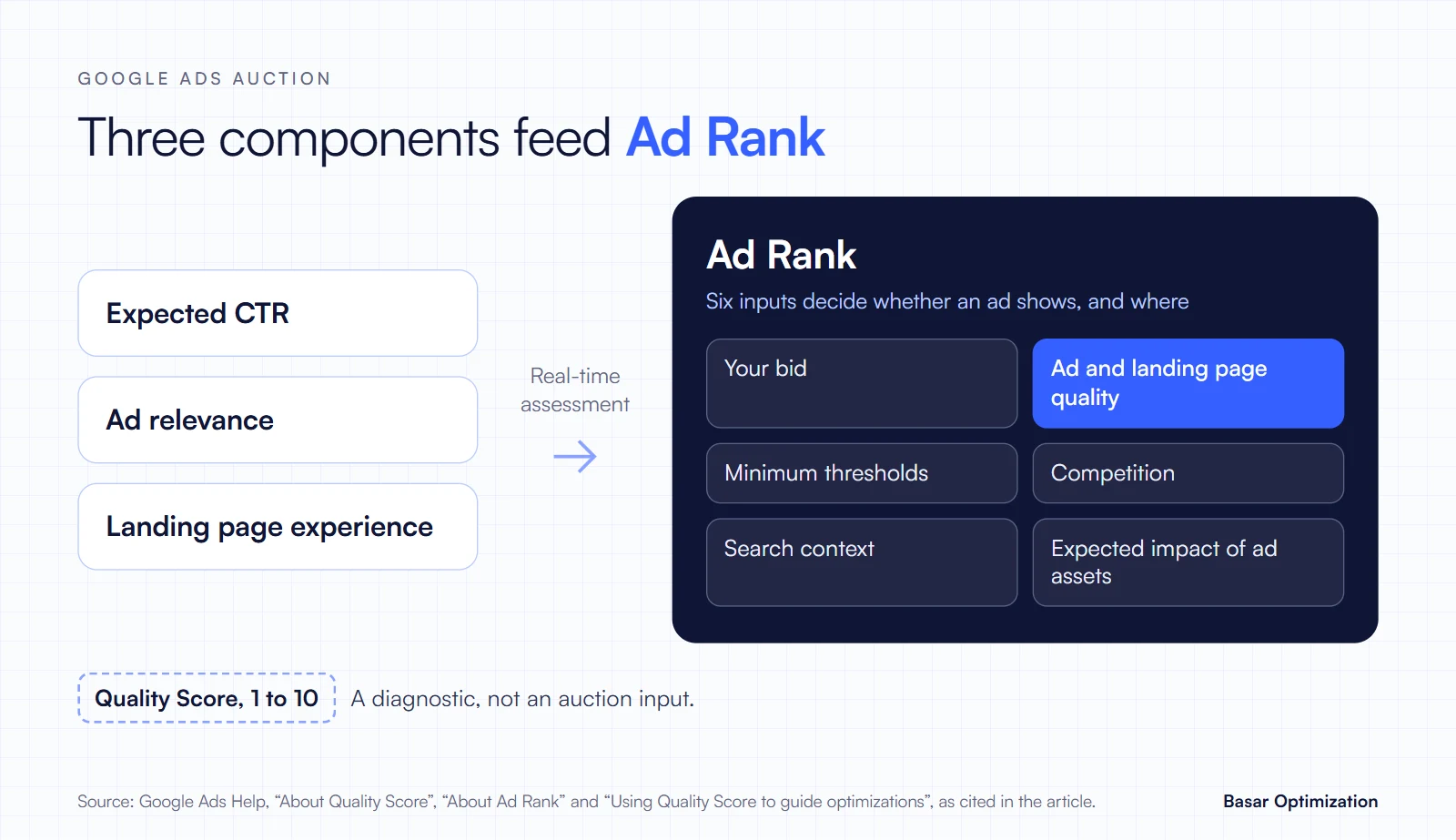
No. Google says the auction does not take Quality Score as an input, and that it should not be treated as a key performance indicator. The auction instead uses a real-time assessment of the same three components (Google Ads Help, using Quality Score to guide optimizations).
That assessment feeds Ad Rank, the set of values that decides whether your ad can show and in which position. Google lists six inputs to Ad Rank: your bid, ad and landing page quality, minimum thresholds, competition, search context and the expected impact of ad assets (Google Ads Help, About Ad Rank). Our Google Ads glossary defines Ad Rank and its thresholds.
How to Improve Quality Score, and What a Dash Means
Google's guidance on how to improve quality score maps one fix to each weak component (Google Ads Help, 5 ways to use Quality Score). For weak ad relevance, split broad ad groups into tighter themes so one ad can answer each set of keywords. For weak expected CTR, sharpen the offer and make the ad match the keyword's intent. For a weak landing page, deliver what the ad promised, keep the message consistent, and make the page fast and easy to use on a phone: only 48% of mobile sites had good Core Web Vitals in HTTP Archive's 2025 data. In a 2009 NYU Stern study of a U.S. retailer, a better landing page score went with higher conversion rates and lower cost per click.
A dash ("—") in the score column means there have not been enough exact-match searches to calculate a score.
Final Thoughts
Quality Score helps when read as Google intends: a keyword-level hint about relevance, not a scoreboard. Watch the three components, fix the weakest one first, and judge success by conversions and cost per lead; a 2011 field experiment found the top position was not always most profitable. The 17 reasons to use Google Ads explain where search ads fit, and our Google Ads management applies this diagnosis to live accounts. To have your keywords' component statuses reviewed, request a quote.
Frequently Asked Questions
What is a good Google Ads Quality Score?
Google does not set a target. A higher score means your ad and landing page look more relevant than competitors' for that keyword, but Google says the score is a diagnostic, not something to optimize for its own sake. Focus on any component marked "Below average," then judge results by conversions.
Does changing match types change Quality Score?
No. Google calculates Quality Score from past impressions on searches that exactly match the keyword, so switching match types does not change the calculation. A broader match type can help a keyword enter more auctions and collect enough exact-match data for a score to appear.
Does Quality Score affect what I pay per click?
Not directly, because the score itself is not an auction input. The auction uses real-time evaluations of expected CTR, ad relevance and landing page experience, which feed Ad Rank together with your bid and other factors. Improving those components can therefore influence both position and cost.
How often does Quality Score update?
Google does not publish a fixed schedule, but it lets you view past Quality Score values for a reporting period and segment the keyword table by day to see daily changes. Because component statuses compare you with advertisers over the last 90 days, judge changes over weeks rather than days.