
What Is Post-Click Optimization?
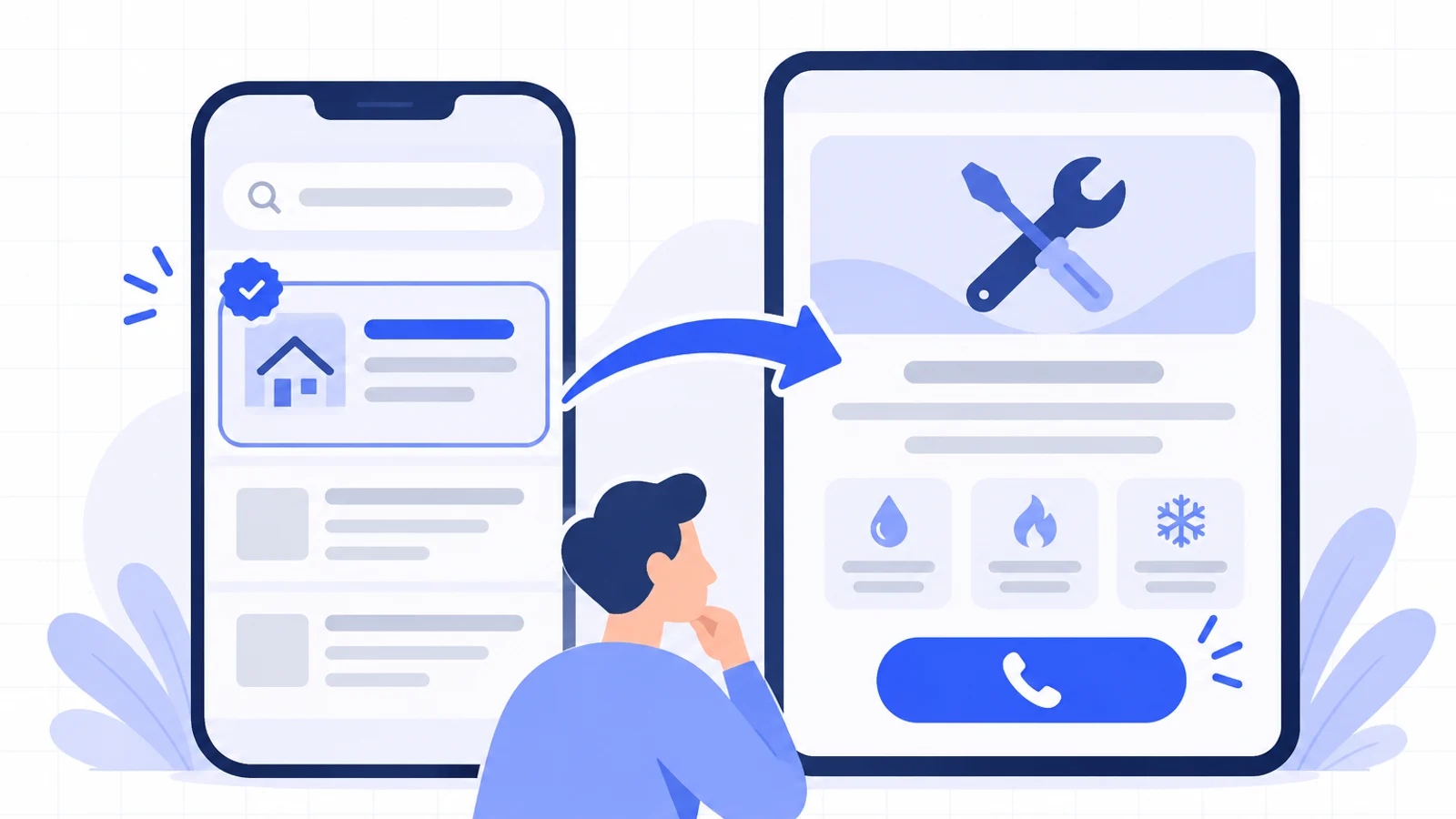
Post-click optimization is the work of improving everything a visitor experiences after clicking an ad: the landing page, its loading speed, its message and the action it asks for. Most advertising effort goes into the click itself, yet the decision to call or enquire is made on the page that follows.
Why post-click optimization matters in Google Ads
A paid click is only an opportunity: if the page is slow, generic or confusing, the money is spent and nothing follows. A better page makes every click you buy worth more.
There is also a platform reason. Google's Quality Score, a 1 to 10 diagnostic rating at keyword level, combines three components, and one of them is landing page experience: Google's judgment of whether the page genuinely serves the people who arrive from the ad. Google states that Quality Score itself is not an auction input, but the landing page experience status shows where a page is falling short of competing advertisers on the same searches.
What Google measures after the click
Google defines two measures worth knowing.
The first is the landing page experience status, reported per keyword as above average, average or below average, compared with other advertisers over the previous 90 days.
The second is Core Web Vitals, the loading, responsiveness and visual-stability metrics described on web.dev: main content visible within 2.5 seconds, a response to taps within 200 milliseconds, and layout movement at or below a score of 0.1, each judged at the 75th percentile of real visits. Many sites miss them: the HTTP Archive's 2025 Web Almanac found only 48% of mobile websites met all three in July 2025. Google's page experience guidance treats these as part of page experience.
Neither tells you whether visitors became customers. For that, Google Ads relies on conversion measurement: counting form submissions, calls and other actions you define as valuable.
Google Ads landing page best practices: a short checklist
- The page answers the exact search the ad targeted, not the business in general.
- The headline repeats the ad's promise in the opening lines, where eyetracking studies show scanners look most.
- The phone number is tappable and the form is short and clearly labelled. In one lab study of 65 people using newspaper sign-up forms, 78% of guideline-improved forms went through first time, against 42% of the originals.
- The main content appears quickly on a mid-range phone.
- Nothing jumps as images or banners load.
- Every enquiry route is tracked as a conversion.
Work through the list one page at a time, busiest paid page first. Note the date of each fix and compare conversion rates over equal periods, so you can tell which change made the difference.
The short version
Post-click optimization treats the landing page as part of the campaign rather than an afterthought. Built well, that page comes from web development and ad management working together, and it deserves the same attention as bids and keywords in Google Ads management. If you would like a second look at the pages your ads send people to, you can request a quote.
Frequently Asked Questions
Is post-click optimization the same as conversion rate optimization?
They overlap. Conversion rate optimization covers any page and any visitor source, while post-click optimization focuses on the pages paid ads send people to and on matching them to the ad and the search. The methods, such as clearer messages, shorter forms and faster pages, are largely shared.
Does a better landing page lower Google Ads costs?
It can help, but Google gives no fixed relationship. Landing page experience is one of three Quality Score components, and Google describes the overall score as a diagnostic tool, not an input to the auction. The dependable benefit is that more of the clicks you already pay for turn into enquiries.
What should a Google Ads landing page include?
A headline that matches the ad, a direct answer to the search, the service area, a tappable phone number, a short form and evidence that builds trust. It should load quickly on a phone, stay stable while loading and track every enquiry as a conversion so results can be judged.
How do I know if my landing page is the problem?
Check the landing page experience status for your main keywords, then compare conversion rates by landing page. If clicks arrive but enquiries do not, and the status reads below average, the page is a likely cause. Confirm that conversion tracking works before drawing conclusions.